

Ventilation
-
 out of stock
Starting at $34.99
Out of stock
-
 out of stock
Starting at $14.99
Out of stock
Boat Ventilation
Whether you are moving moisture out of a sealed cabin, replacing a worn cowl vent, or adding a fuel vent on a permanent fuel tank, the right marine boat ventilation depends on the space you are ventilating and how the vent will mount. At Marine Depot Direct, you will find boat vents in cowl, louvered, deck plate, butterfly, midget, and fuel vent styles, plus access plates, replacement gaskets, and louver inserts in 316 and 304 stainless steel and marine-grade plastic.
Vent Types
Vents fall into a few categories based on how they move air and where they mount.
Cowl Vents
Cowl vents face the airflow when the boat is underway and pressurize the space they feed. They protrude above the deck and work passively while in motion, and they reverse to function as an exhaust vent. Most installations use a dorade box below deck to keep water out while air continues to flow.
- 316 stainless steel cast low-profile cowl vents (white, dorade set)
- Stainless round cowl vents (white, dorade set)
- Replacement rubber gaskets for cowl vents and deck plates
Deck Plates and Access Plates
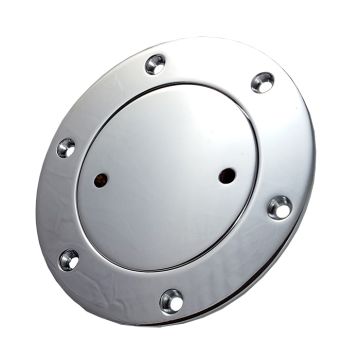
Deck plates and access plates sit flush on horizontal surfaces and provide both ventilation and access to interior spaces. Deck plates allow steady passive airflow without ducting and serve as inspection ports for tankage and storage compartments. A standard deck plate is designed to be watertight and airtight when closed to prevent downflooding. Access plates are sized for hand and arm reach into rigging and storage areas.
- Stainless standard deck plates
- Stainless deck plates with star pattern
- Chrome-plated deck plates
- HiTide 9 inch x 14 inch innovative access plates in arctic white and Jim Black finishes
- HiTide access plate handle kits
Louvered Vents
Surface-mounted with angled louvers that pass air while shedding spray and rain. Common for cabin sides, transom panels, and helm console intakes. Louvered boat vents are stocked in 316 stainless steel and marine-grade plastic across a wide size range.
- Stainless stamped louvered vents
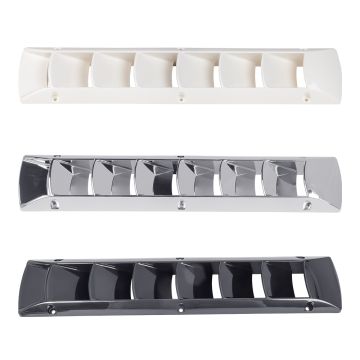
- 7-slotted plastic louvered ventilators in white and black, 17-7/8 inch x 3-7/16 inch
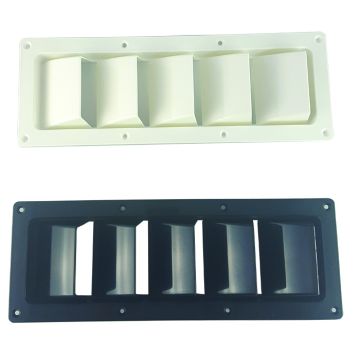
- 5-slotted plastic louvered ventilators, 13-1/4 inch x 4-3/4 inch
- White plastic louvered vents in 5-1/2 inch x 4-7/8 inch and 10-1/4 inch x 4-7/8 inch sizes
Butterfly and Midget Vents
Butterfly and midget vents are smaller-format vents for cabin partitions, helm consoles, and tight installations where a full louvered vent is too large.
- Stainless steel butterfly vents
- 304 stainless steel midget vents
- Stainless marine vent grilles
Fuel Vents
Fuel vents allow air to enter the fuel tank as fuel is drawn out, preventing pressure buildup. They are critical for exhausting dangerous fumes during refueling and allowing the tank to breathe during thermal expansion. They are typically mounted to the hull side and connected to the tank with marine-grade fuel hose.
- Stainless straight fuel vents for 5/8 inch hose
Replacement Covers and Gaskets
Replacement covers and gaskets let you refresh a sound vent assembly without replacing the entire unit. Sized to match common cowl vent and deck plate footprints.
- Replacement rubber gaskets for cowl vents and deck plates
- Replacement louver inserts
Choosing the Right Vent for Your Application
Vent selection depends on where the vent will mount, how much airflow you need, and whether the vent will be exposed to spray. The product types in this category cover applications from cabin moisture control to fuel tank venting.
- Cowl vents: best for active airflow when underway, with a dorade box for water separation
- Deck plates: best for flush-mount passive airflow and inspection-port access
- Louvered vents: best for spray-prone hull-side and transom locations
- Butterfly and midget vents: best for cabin partitions and tight helm console installations
- Plastic louvered vents: best for interior cabin partitions where corrosion exposure is low
- Fuel vents: required for any tank that needs air-pressure equalization
Materials and Mounting
316 stainless steel is the durable choice for vents mounted in salt-spray locations such as bow and side decks. ABS plastic and marine-grade polypropylene work for cabin-side and interior installations where UV and impact loads are lower.
The mounting surface must be reinforced where the vent passes through cored deck construction. Otherwise water entering through the vent throat will saturate the core. Use butyl tape or marine sealant on the flange and bed the fasteners individually.
Replacement Parts and Accessories
Replacement rubber gaskets for cowl vents and deck plates, replacement louver inserts, and HiTide access plate handle kits are stocked separately. A damaged cover or worn gasket does not require replacing the entire vent assembly.
If you are unsure which ventilation option to choose, contact us and our team can help with general product guidance, mounting style questions, and selection support.
Why Buy from Marine Depot Direct?
We stock marine vents across cowl, louvered, deck plate, access plate, butterfly, midget, and fuel vent styles in stainless steel and marine-grade plastic. Our team can confirm vent throat diameter, mounting cutout dimensions, and gasket fit against your existing installation before you order.
Frequently Asked Questions About Boat Ventilation
What is the difference between stainless and plastic louvered vents?
Stainless louvered vents resist corrosion in salt-spray locations and hold up to repeated cleaning without UV degradation. They are the standard for hull-side and transom installations on saltwater boats. Plastic louvered vents work well for cabin partitions, interior bulkheads, and other locations where corrosion exposure is low and weight matters more than long-term durability.
What is the difference between a cowl vent and a deck plate?
Cowl vents face airflow and force fresh air into the interior they feed when the boat is underway. They protrude above the deck and work passively while in motion. Deck plates sit flush on horizontal surfaces and provide steady passive airflow plus access to interior spaces below. Cowl vents move more air at speed; deck plates move air at rest and double as inspection ports.
How do I match a replacement vent to my existing cutout?
Measure the throat diameter of the existing vent and the outside flange dimensions before ordering. Replacement gaskets are sized to common cowl vent and deck plate footprints, so a sound vent body with a damaged gasket usually only needs a gasket replacement rather than a full vent. If the cutout itself is enlarged or damaged, choose a replacement vent with a larger flange that covers the existing hole, then re-bed with butyl tape or marine sealant.